



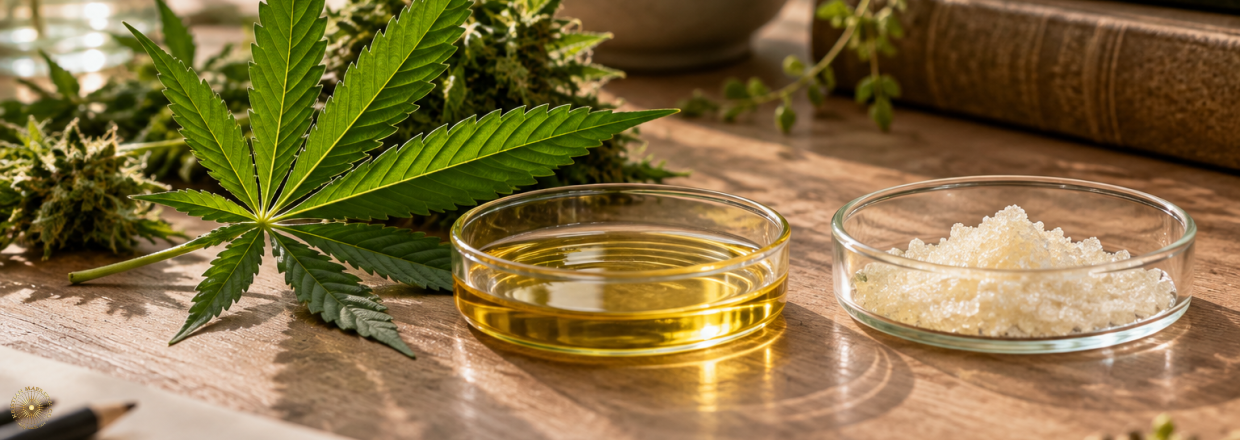
One headline says cannabis, the next says CBD and a third mentions THC. They can sound like three names for the same thing. Imagine someone describing “a substance from a citrus fruit” without saying whether they meant sugar, acid or an aromatic compound. Naming the plant identifies an origin; it does not tell the whole story about the substance.
A plant is not a single substance
Cannabis names a plant; CBD and THC name particular chemical compounds. When reading research, ask whether the study concerns the plant, an extract or an isolated substance. Findings cannot automatically be transferred between those categories.
The CDC describe THC as intoxicating, whereas CBD alone does not cause the same high. The NIH also note that CBD can cause adverse effects and interact with medicines. “Non-intoxicating” therefore does not mean “risk-free”. These are separate questions requiring separate evidence.
A concrete example
Compare two imaginary headlines: “Researchers investigate CBD” and “Researchers investigate an extract containing CBD and THC”. They look similar, but describe different test materials. Calling both a CBD experiment would discard an important detail. The same happens when a report leaves out the participants, measurements or duration. A precise description is part of understanding the result, rather than an optional technical footnote.
Look for the exact substance
If a headline simply says “cannabis”, find out which substance or mixture the researchers actually studied. Check who participated and what was measured. A result for a particular experimental treatment does not establish the properties of every other substance from the same plant.
I find the discussion more useful when we use specific names.
We will publicly show your name and comment on this website. Your email is to ensure that the author of this post can get back to you. We promise to keep your data safe and secure.