



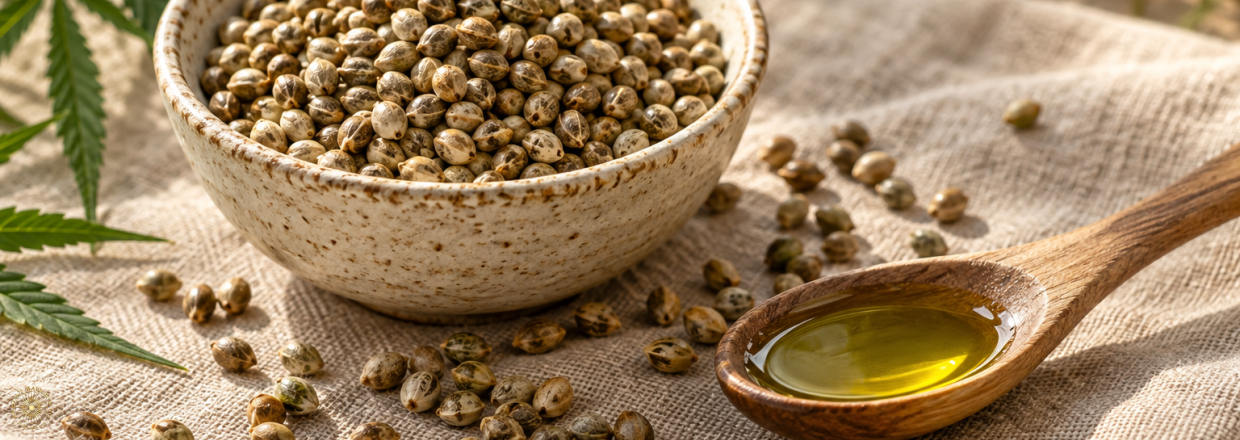
A bowl of seeds, a leaf and a flower may belong to the same plant. We would not expect their contents to be identical. Yet that distinction can disappear when longer descriptions are shortened to “hemp oil”. The simple phrase hides several questions: Which plant part was used, how was the material made, and which substances does the article actually discuss?
A name does not tell the whole story
“Hemp oil” can be an imprecise expression. Which plant part was used, and what does the term describe? Origin and chemical composition are separate pieces of information. Neither should be assumed from a broad name alone.
The FDA and Germany’s BfR explain that hemp seeds do not naturally contain cannabinoids. Traces may reach them through contact with other plant parts during harvesting and processing. This differs from extracting cannabinoids from plant material that contains them.
A concrete example
Try separating the nouns. “Seed” identifies a plant part. “Oil” describes a material rather than one specific chemical compound. “CBD” names a particular substance. These pieces of information cannot replace one another. If a research report only says “hemp”, the reader still needs to know what the researchers examined. A small detail in the wording can change the meaning of the whole story.
Keep the questions separate
Imagine an article mentioning “oil from the cannabis plant”. The wording only becomes useful when the plant part and process are explained. On its own, it does not establish whether the article concerns a fatty oil or an extract containing other compounds. The distinction matters when interpreting research reports too.
For me, this illustrates the value of precise terminology.
We will publicly show your name and comment on this website. Your email is to ensure that the author of this post can get back to you. We promise to keep your data safe and secure.