



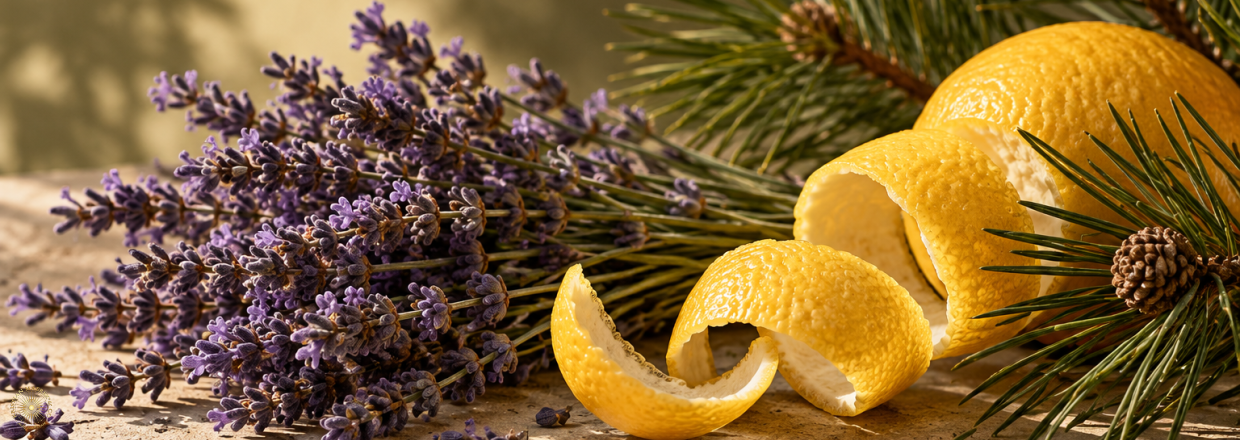
You do not need to know a chemical name to recognise a scent. Bending a lemon peel or placing lavender on a table can evoke an immediate experience. That familiar moment is a useful starting point for a more complex subject. Terpenes and related compounds are among the groups researchers investigate when studying the aromatic profiles of plants.
A large family of compounds
Terpenes form a diverse group of natural compounds found in many plants. Researchers study both their chemical diversity and the processes plants use to produce them. Cannabis therefore belongs to a broader botanical research field rather than possessing chemistry entirely separate from other plants.
Calling a plant fresh, spicy or woody describes an experience. It is not a laboratory measurement of individual compounds. People may perceive a fragrance differently, and a description cannot establish the quantity of each substance present.
A concrete example
Imagine two people describing the same plant. One says “citrus”, the other “fresh woodland”. Both describe a sensory experience, but neither has provided a list of measured compounds. A laboratory report instead needs to identify what was examined and explain the method. Smell and analysis can be interesting alongside one another without being interchangeable. Even a word such as “soothing” deserves context: is it describing someone’s experience of a scent, or making a claim that requires different evidence?
Chemistry is not a health claim
Identifying a compound addresses what is present. It does not automatically establish an effect in humans; that requires a different kind of investigation. A pleasant fragrance is therefore not evidence of a particular health benefit.
I find fragrance chemistry interesting because it reminds us of plant complexity.
We will publicly show your name and comment on this website. Your email is to ensure that the author of this post can get back to you. We promise to keep your data safe and secure.