


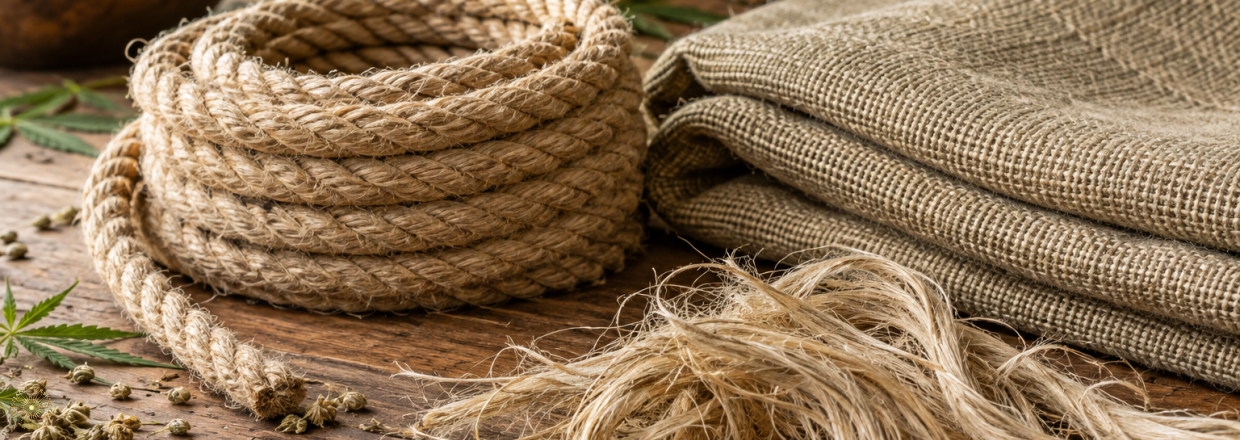
Place a rope beside a woven cloth. One may need to hold something securely; the other should drape over a chair or shoulder. Even if both contain hemp fibres, their jobs demand different things. The distance between raw material and finished object makes this a fascinating material story.
One material, different forms
The European flax and hemp industry alliance describes historical uses in rope and sails and contemporary uses in clothing and household textiles. Fibres are processed differently for different purposes. “Hemp” can therefore describe fabrics with very different structures.
A textile is more than its original plant. Processing, spinning, weaving and possible blends help shape the finished material. Discussing a particular fabric is more precise than assigning identical properties to every hemp fibre.
A concrete example
Begin with eyes and hands. Is the yarn thick or fine? Is the weave open or dense? Is the cloth a blend? These observations describe the material, although they are not a durability test. Comparing textiles also requires a comparable purpose: heavy upholstery and a light summer scarf are not rivals on every property. The question is not simply which plant supplied the fibre, but how processing and craftsmanship turned it into something useful.
A broader perspective
The European Commission lists textiles among hemp’s industrial uses. One plant can be relevant to chemistry, agriculture, materials engineering and cultural history. A question about a fibre is not the same as a question about a cannabinoid.
I find the connection between raw material and craftsmanship especially interesting.
We will publicly show your name and comment on this website. Your email is to ensure that the author of this post can get back to you. We promise to keep your data safe and secure.